Screens and AI toys hurt children – level 3

12-06-2026 15:00
People are social creatures who have a deep need for real-world community and connection.
However, the modern phone-based childhood, which began in the early 2010s, has shifted young people’s social lives online and taken away essential physical bonding experiences such as sharing food, laughter, and touch. Multiple studies show that this shift causes loneliness, anxiety, and depression. Furthermore, the constant use of social media and short videos fragments adolescents’ attention systems and causes what young people call brain rot.
Social psychologist Jonathan Haidt explains three main principles of techno-skepticism. First, protect brain development through puberty by raising the age limit for opening social media accounts to 16. Second, prioritize people and books over screens in education. Modern classroom research shows that personal devices often impair student learning and lower national test scores. Third, beware of artificial relationships for small children, such as responsive AI toys and chatbots, which can interfere with a child’s natural attachment system and affect relationships with their parents. Instead of treating technology as an automatic advantage for the future, companies should show their products are safe before giving them to children.
Difficult words: bonding (the process of developing a close emotional relationship or connection with someone), brain rot (a modern slang term for the feeling of mental tiredness, laziness, or lower attention caused by spending too much time watching low-quality internet content), prioritize (to decide that something is more important than other things and should be dealt with first), impair (to damage something, or to make something weaker, worse, or less effective).
You can watch the video news lower on this page.
What are the three main principles of techno-skepticism Jonathan Haidt explains?
LEARN 3000 WORDS with NEWS IN LEVELS
News in Levels is designed to teach you 3000 words in English. Please follow the instructions
below.
How to improve your English with News in Levels:

Test
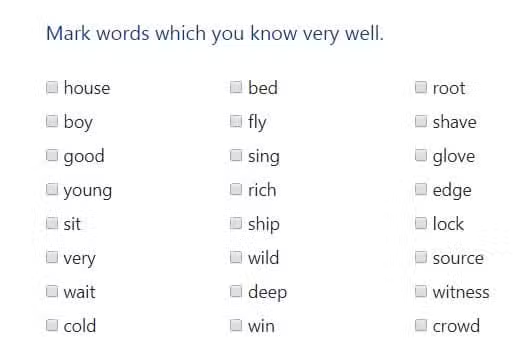
- Do the test at Test Languages.
- Go to your level. Go to Level 1 if you know 1-1000 words. Go to Level 2 if you know 1000-2000 words. Go to Level 3 if you know 2000-3000 words.

Reading
- Read two news articles every day.
- Read the news articles from the day before and check if you remember all new words.

Listening
- Listen to the news from today and read the text at the same time.
- Listen to the news from today without reading the text.

Writing
- Answer the question under today’s news and write the answer in the comments.

Speaking
- Choose one person from our Conversation section.
- Talk with this person. You can answer questions from Speak in Levels.
Stock images by Depositphotos